
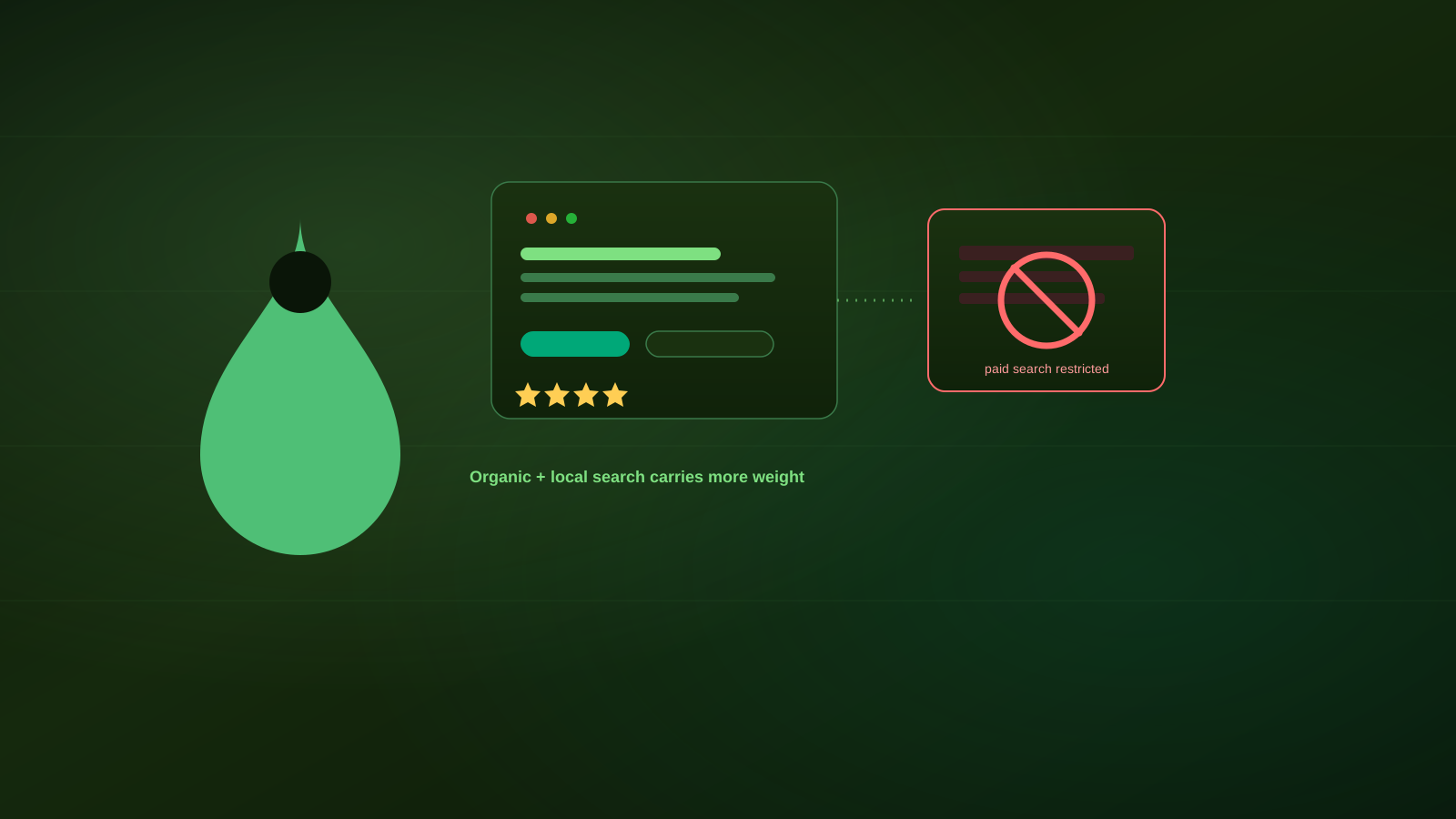
Most retail businesses can lean on paid search to fill gaps in organic visibility. Dispensaries largely can't — Google's advertising policies restrict ads for cannabis products regardless of state-level legality, which removes a channel most other local retailers take for granted. That makes organic and local search visibility carry more relative weight for this category than for most businesses, not because dispensaries need a fundamentally different strategy, but because there's less room to compensate for a weak one.
None of what follows involves special tricks. It's the same local SEO fundamentals applied carefully, with real attention to a category where advertising options are limited and regulatory sensitivity matters. Regulations vary significantly by state and locality — this is general guidance, not a substitute for checking current rules that apply to your specific business.
Because advertising restrictions limit access to paid search for most dispensaries, organic visibility — Google Business Profile accuracy, local content, citations, and reviews — carries more of the burden of getting found than it does for a typical retail business with a full advertising toolkit available.
Why organic search matters more for dispensaries than most retailers
With paid search largely unavailable, a dispensary's visibility in organic results and the local map pack is doing work that would otherwise be split across paid and organic channels. That raises the stakes on getting the fundamentals right: accurate business information, a complete Google Business Profile, genuinely useful content, and a technically sound website all matter more when there's no paid channel to fall back on.
Google Business Profile works differently for regulated categories
Dispensaries can and should maintain a complete, accurate Google Business Profile — but category options, product attributes, and certain features can behave differently for regulated categories than they do for typical retail. It's worth checking your available options directly in the profile rather than assuming standard retail settings and features apply the same way. Accuracy and completeness within whatever options are actually available still matters as much as it does for any local business.
Content should answer real product and compliance questions — without making medical claims
Useful content for this category answers the questions real customers actually have: what's in stock, licensing and age-verification requirements, hours, location, and general product information. What it should avoid is unverified medical or health claims — regulations on this vary significantly by state, and making claims outside what's legally permitted creates real compliance risk that has nothing to do with SEO. When in doubt, favor accurate, compliant, general information over anything that reads as a health promise.
Local citations and directories built for cannabis retail
Beyond standard local citations, industry-specific directories exist for cannabis retail. Their SEO value works the same way any citation's does — accuracy and consistency matter, and a listing is only worth having if the directory has genuine relevance and real traffic, not just because it exists. Treat industry directories the same way you'd evaluate any other citation source: is it credible, is it accurate, would a real customer actually use it to find you.
Reviews and reputation in a heavily regulated category
Reviews matter for dispensaries exactly the way they matter for any local business: they help prospective customers evaluate you and signal real engagement to Google. The same rules apply regardless of industry — no gating reviews, no incentivizing only positive ones, no manipulation. Given the additional regulatory scrutiny this category already operates under, that guidance is worth following especially carefully.
A practical local SEO checklist for dispensaries
| Area | What to review | Why it matters |
|---|---|---|
| Google Business Profile | Accuracy within available category/feature options | Primary local visibility channel without paid search |
| Business information | Consistent name, address, phone, hours everywhere listed | Reduces ambiguity for Google and customers |
| Product/compliance content | Accurate, compliant information without medical claims | Answers real questions while managing regulatory risk |
| Industry citations | Accurate listings on credible, relevant directories | Supports consistency and local relevance |
| Reviews | Genuine reviews, responded to, no manipulation | Builds trust without policy risk |
| Technical health | Site is crawlable, indexable, and fast | Removes blockers with no paid channel to compensate |
When to get help with dispensary local SEO
Given how much weight organic visibility carries for this category, it's worth a closer look any time listings are inconsistent, the Google Business Profile hasn't been reviewed recently, competitors are consistently more visible in local search, or there's no clear content or citation strategy in place. Our West Palm Beach SEO guide covers the broader local SEO foundation this builds on.
Want a local SEO review built for a regulated category?
We understand the constraints dispensaries operate under and can review what's actually working — and what isn't — in your current setup.
Frequently Asked Questions
Google's advertising policies restrict ads for cannabis products, which limits access to paid search for most dispensaries regardless of state legality. That's a major reason organic and local search visibility carries more relative weight for this category than for most retail businesses.
Dispensaries can and should maintain an accurate, complete profile, but category options, product attributes, and certain features may behave differently for regulated categories than for typical retail businesses. It's worth checking current profile options directly rather than assuming standard retail settings apply.
This depends on state regulations and varies significantly by jurisdiction. As a general practice, content should avoid unverified medical or health claims and focus on accurate, compliant product and business information — consult applicable state and local regulations and legal counsel for specifics.
Accurate listings on legitimate, well-used cannabis-industry directories can support local visibility and consistency, similar to how citations work for any local business. Their value depends on the directory's real relevance and traffic, not just its existence.
Reviews matter for dispensaries the same way they matter for any local business — they help prospective customers evaluate you and signal real engagement to Google. The same rules apply: no gating, no incentivizing, no manipulation, regardless of industry.
For the fuller local SEO foundation this builds on, read our West Palm Beach SEO guide and Google Business Profile guide, or browse more breakdowns in the SEO Info Vault.