
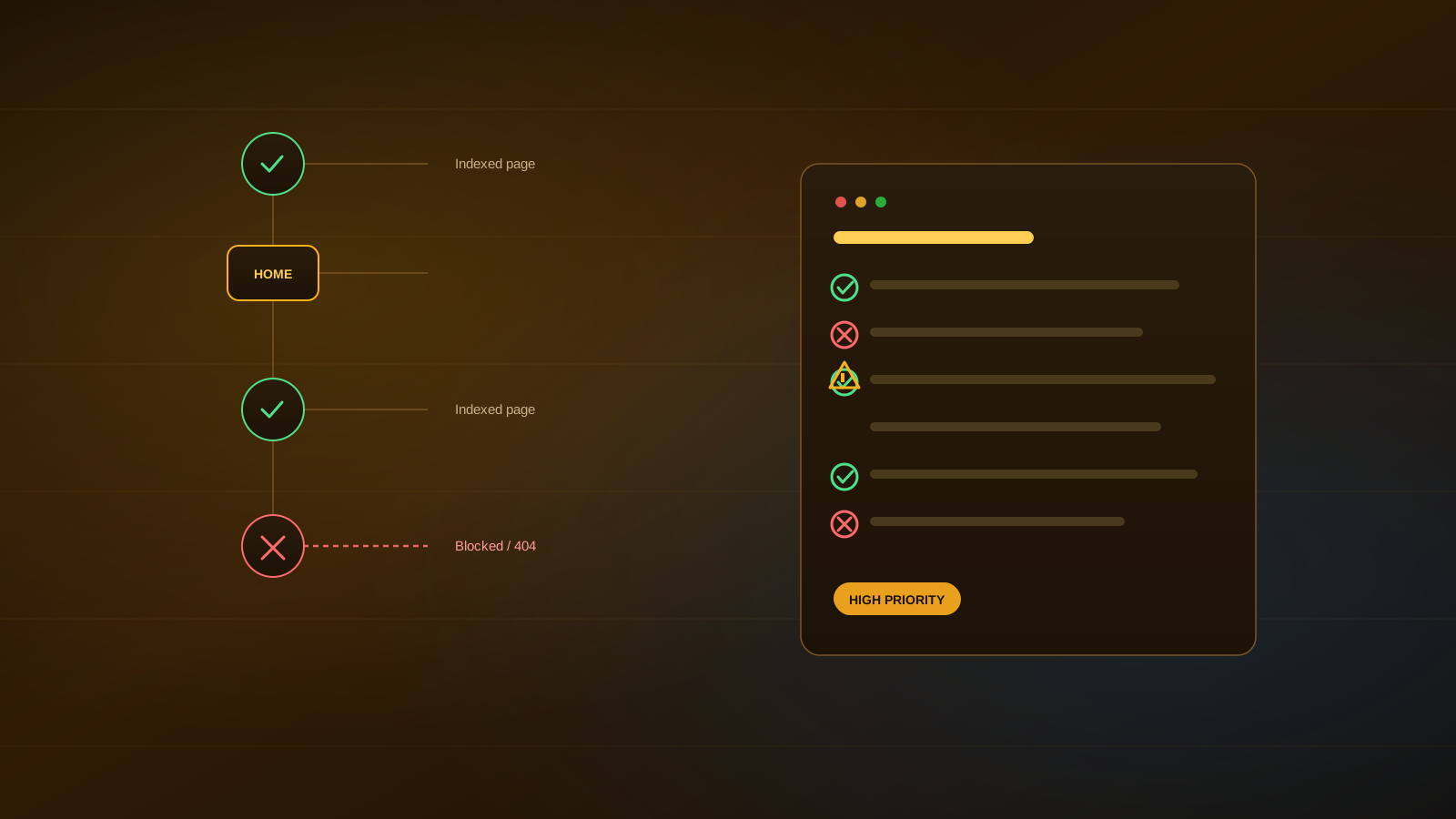
A technical SEO audit identifies the issues that stop search engines from crawling, understanding, indexing, and confidently ranking the right pages on your site. It turns a vague "our SEO isn't working" problem into a prioritized, specific repair plan — one that separates what's genuinely limiting growth from what's simply imperfect but harmless.
That distinction matters. Not every technical issue is worth fixing today, and treating a full crawl report as a flat to-do list usually wastes time on low-impact items while real blockers sit untouched. A useful audit prioritizes by business impact, not by the length of the issue list.
It reviews whether your site can be crawled and indexed correctly, whether its architecture and internal links support the pages that matter most, whether duplicate content and canonical tags are handled correctly, whether page experience and Core Web Vitals create friction, and whether structured data is valid and aligned with what's visible on the page.
A technical SEO audit finds the blockers behind weak organic performance
The goal isn't a list of every technical imperfection a crawler can find — most sites have dozens of those, and chasing all of them is a poor use of time. The goal is identifying which issues are actually affecting discoverability, user experience, or conversion, and which ones simply don't matter enough to prioritize right now. That requires judgment, not just a scan.
Crawlability and indexability come first
Before anything else, a page has to be reachable and eligible to be indexed. That means checking robots directives and noindex tags for anything blocking pages that should be indexed, confirming your XML sitemap reflects the pages you actually want found, verifying that important pages are actually reachable through internal crawl paths rather than isolated with no links pointing to them, watching for HTTP status-code issues on key pages, and — for JavaScript-heavy sites — confirming that content actually renders in a way search engines can process.
This is diagnostic work, not a reason to start editing robots.txt or your sitemap on a hunch. Unnecessary changes to either file can do more damage than the problem you were trying to fix — identify the issue clearly first, and treat any change to crawl-control files as something to plan carefully, not something to experiment with live.
Site architecture and internal links determine which pages matter
Search engines use internal links — and their anchor text — as one signal for what a page is about and how important it is relative to the rest of the site. A logical navigation hierarchy, sensible URL structure, and a reasonable crawl depth (important pages shouldn't be five or six clicks from the homepage) all support that. So does anchor text that actually describes the destination page instead of generic "click here" links.
Two patterns worth checking specifically: orphaned pages with no internal links pointing to them at all, and duplicate or near-duplicate pages competing for the same topic instead of one strong page owning it. Both are common, both are easy to miss without a structured crawl, and both quietly dilute a site's ability to rank for the terms it should own.
Duplicate pages, canonicals, and redirects need clear rules
Duplicate content — the same or substantially similar content reachable at multiple URLs — creates ambiguity about which version should rank. Common causes include URL parameters, filtered or sorted category views, and inconsistent handling of trailing slashes or www versus non-www versions of a domain. Canonical tags exist to tell search engines which version is the "real" one; when they're missing, inconsistent, or pointed at the wrong page, that signal breaks down.
Redirects and broken links matter for similar reasons: a long redirect chain wastes crawl efficiency and can weaken the signal being passed along, and 404s or soft 404s on pages that should exist point to migration or content-management issues worth investigating. None of this is a call to start changing redirect rules or canonical logic without a clear plan — these changes are easy to get wrong and hard to diagnose after the fact, so they're worth scoping carefully with whoever manages the site before anything goes live.
Page experience matters when it affects real users
Mobile usability, page speed, and Core Web Vitals affect how real visitors experience your site — slow loads, layout shifts as content jumps around while loading, and render-blocking scripts all create friction that can cost you a conversion even on a page that ranks well. Image sizing and compression, intrusive interstitials, and anything that makes a mobile visitor fight the page all fall into the same category.
It's worth being precise about what this does and doesn't do: strong Core Web Vitals support a better user experience and remove a source of friction, but they are not a guaranteed ranking boost on their own. Treat page experience as part of removing friction from the path to conversion, not as a silver bullet.
Structured data should clarify content, not manipulate results
Valid, visible-content-aligned schema — Organization, LocalBusiness, Product, Article, BreadcrumbList, or FAQPage markup, depending on what a page actually contains — helps search engines understand your content accurately. It should describe what's genuinely on the page, nothing more. Schema does not guarantee rich results, ranking improvements, or inclusion in any AI-driven search feature; using it to imply something the page doesn't actually deliver is a real risk, not a growth tactic.
Content quality and technical SEO need to work together
A technically clean site with the wrong content still won't perform. Thin or duplicate content, vague service pages that don't match real search intent, weak internal linking between related topics, metadata that doesn't match what a page is actually about, and topical overlap between pages competing for the same query are content problems a technical crawl alone won't fix — and a content strategy alone won't fix technical blockers either. If your business serves a specific area, our West Palm Beach SEO guide covers how local content and technical health need to work together specifically for local search.
A useful technical SEO audit prioritizes fixes by impact and effort
The most useful output of an audit isn't a list — it's a prioritized list. Here's the kind of prioritization that actually helps:
| Issue type | Example symptoms | Typical business impact | Recommended next step |
|---|---|---|---|
| Indexability | Key pages missing from Google's index | Often high — the page can't rank if it isn't indexed | Investigate immediately |
| Crawl paths | Orphaned or deeply buried pages | Varies by page value | Add internal links from relevant pages |
| Canonical / duplication | Multiple URLs for the same content | Can split ranking signals | Standardize canonical tags |
| Broken links / redirects | 404s, long redirect chains | Usually moderate, sometimes high on key pages | Fix or update high-traffic instances first |
| Performance / mobile | Slow load, layout shift, poor mobile usability | Affects conversion more directly than ranking | Prioritize on high-traffic, high-intent pages |
| Schema validity | Errors, mismatches with visible content | Usually moderate | Correct or remove inaccurate markup |
| Internal links | Weak linking between related pages | Varies by site structure | Add contextual, descriptive links |
| Page intent | Content doesn't match what searchers want | Often high — a content issue, not just technical | Revise content, not just markup |
| Measurement | No clear baseline or tracking in place | Makes every other fix hard to evaluate | Establish tracking before making changes |
Not every issue on a crawl report is universally high impact — the right priority depends on which pages are affected, how much traffic or revenue runs through them, and how the issue interacts with the rest of the site.
When to request a technical SEO review
A few situations are reliable signals that it's time for a closer look: a decline in organic search traffic without an obvious cause, pages that aren't indexing the way you'd expect, an upcoming redesign or platform migration, ecommerce category or product pages that aren't surfacing in search, new issues appearing in Search Console, content that exists and reads well but simply isn't performing, unexplained changes in how the site behaves, or the absence of any prioritized technical roadmap at all.
Not sure whether your issues are worth prioritizing?
Get a technical SEO review that separates what's actually limiting growth from what's cosmetic — with a clear, prioritized next step for each finding.
Frequently Asked Questions
A technical SEO audit typically reviews crawlability and indexability, site architecture and internal linking, duplicate content and canonical tags, redirects and broken links, page experience and Core Web Vitals, and structured data validity — prioritized by likely business impact.
It depends on the site's size, how often it changes, how much organic traffic is at stake, and how complex the platform is. A large, frequently updated ecommerce site typically needs more regular review than a small, stable brochure site.
Technical SEO removes blockers that stop search engines from crawling, understanding, and confidently indexing your pages. That can improve a site's ability to be found and ranked, but it doesn't guarantee a ranking increase on its own — content quality and relevance still matter.
A technical audit asks whether search engines can properly crawl, render, and index your site. A content audit asks whether the pages that do get indexed actually match what people are searching for. The two overlap but answer different questions, and most sites benefit from both.
Yes. Shopify sites can still develop real technical SEO issues, particularly around collection and product duplication, navigation and faceted filtering, indexing of variant URLs, internal linking between collections and products, and structured data on product pages.
If AI-mediated search is part of why you're reassessing your technical foundation, read what AEO and GEO actually mean for your business. If you're based in Palm Beach County, our West Palm Beach SEO guide covers the local side of this work, or browse more breakdowns in the SEO Info Vault.